VolleyCraft
- 3.9
- Rating
- 50.00K
- Installs
- Free
- Price

 Analysis by App-foxy
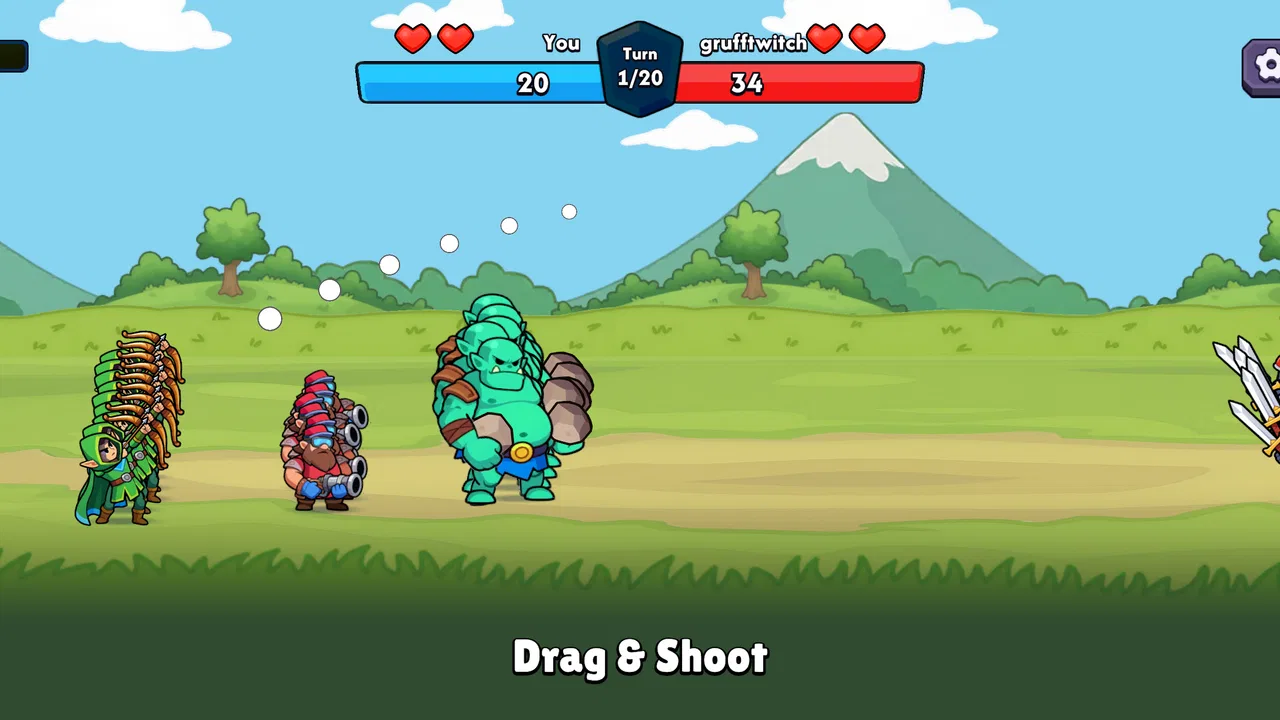
VolleyCraft caught my attention because it takes a familiar idea—turn-based tactical shooting—and puts the emphasis on building an army before each duel. I spent time with it as a strategy game rather than treating it like a quick arcade shooter, and that distinction matters. The satisfying part is not simply aiming at an opponent. It is deciding how to spend limited opportunities, arranging a force that can answer different threats, and accepting that a clever plan can still unravel when the other player reads it correctly.
That makes it a better fit for someone who enjoys short competitive decisions than for someone looking for a long campaign or a relaxed idle game. It is free to start, developed by VOODOO, and carries an Everyone 10+ content rating. The current version is 1.5.3, and the game has reached over fifty thousand installs with a 3.9 average from around one thousand four hundred ratings. Those figures suggest a growing but still relatively small player base, which matches the feeling of discovering a focused game rather than entering an enormous established ecosystem.
Why the army-building ability changes each duel
The defining capability is the relationship between army construction and turn-based shooting. In a normal shooter, the important question is often whether I can react faster or aim more accurately. Here, I have to think one step earlier: what kind of army am I bringing, and what does that choice allow me to do when the duel begins? A well-built force gives me options before the first shot, while a narrow or poorly balanced one can make a match feel difficult before I have made a tactical mistake.
You May Also Like

 Pandora - Music & Podcasts
Pandora’s Music Is Easy to Start, but Harder to Recover
Pandora’s strength is its low-effort path from a seed to a station. Its weak spot is how much confidence it asks you to place in connection, setup, and quiet recovery.

 8 Ball Pool
 Is Built on Rivalries, Rematches, and Routine
A close look at the rivalries, rematches, shared routines, and unanswered safety questions that turn a quick pool match into a persistent mobile community.

 Samsung Music
’s Quiet Strength Is Playing What You Already Own
Its reach comes less from spectacle than from dependable access to a personal library. That simplicity is both the app’s strongest retention engine and its ceiling.

 AccuWeather: Weather Radar
AccuWeather Review: A Quick, Clear Forecast for Everyday Decisions
For everyday plans, the best forecast is the one you can understand quickly. AccuWeather makes rain timing, radar, and local conditions easy to act on, with a few trade-offs.

 Hill Climb Racing
Why Hill Climb Racing Still Turns Crashes Into One More Run
A tiny car, a bumpy hill and one more upgrade: Hill Climb Racing keeps resurfacing because its simple chaos makes every near-miss feel personal.

 AliExpress - Shopping App
AliExpress Makes Global Shopping Feel Personal, but Shoppers Bear the Risk
AliExpress turns a global marketplace into a pocket-sized discovery engine. Its reach is useful, its shopping loop compelling, and its trade-offs easy to miss.
More From Our News Desk
View All News


I found this especially interesting because army building is not just preparation in the background. It shapes the way I interpret the battlefield. If I expect an opponent to pressure one side, I want enough flexibility to respond rather than commit every useful option immediately. If I believe I can create an early advantage, I may accept a more aggressive setup. The game therefore rewards planning, but not the kind of planning that ends when a menu closes. The plan has to survive contact with another player.
The key lesson is to build for choices, not for one impressive opening move. A force that looks powerful on paper can be awkward if it leaves no answer to an unexpected turn. I would rather enter a duel with a slightly less spectacular arrangement that gives me several reasonable actions. That approach also makes defeats more useful, because I can identify whether the problem was my aim, my timing, or the army I brought in the first place.
This is where VolleyCraft separates itself from a standard casual shooter. The shooting is still the visible part of the match, but the strategic layer determines how meaningful each shot becomes. A missed opportunity can be the result of poor execution, yet it can also expose a weakness in the way I assembled my army. That overlap between preparation and action gives the game more depth than its simple premise initially suggests.
Reading a match instead of rushing through it
Turn-based play changes the emotional rhythm. I am not constantly trying to out-click an opponent, so I have room to inspect the situation and consider consequences. That does not make every decision easy. In fact, the pause can make a choice feel heavier, because I know I am responsible for committing to it rather than hiding behind frantic movement.
For me, the best turns were the ones where I resisted an obvious attack. A tempting shot may create immediate pressure, but it can also reveal too much or spend an option that would be more valuable later. Waiting is not automatically wise, either. If I delay without a reason, I simply hand control of the pace to the other player. The useful habit is to ask what I gain by acting now and what I lose by refusing to act.
That habit makes the game approachable for strategy fans who do not enjoy fast reflex tests. It also gives experienced players room to look for patterns. I can watch how an opponent handles pressure, notice whether they favor a predictable response, and adjust my next decision. The game feels most rewarding when I am making those observations rather than treating every turn as an isolated shot.
How I use the system during an ordinary match
My practical routine begins before the duel. I look at the army as a set of possible answers rather than a collection of individual strengths. I want to know what I can do if the first exchange goes well, what remains available if it goes badly, and whether I am relying too heavily on one idea. This preparation takes only a short time, but skipping it makes the later turns feel much more random.
Once the match starts, I try to establish information before spending my strongest option. The first turn is useful for learning how the opponent approaches the duel. Are they trying to create immediate pressure, or are they protecting their own plan? I do not need to guess perfectly. I only need to avoid giving away my entire approach in response to a single move.
A useful workflow is to separate each turn into three questions. First, what changed after the previous exchange? Second, what can the opponent realistically threaten next? Third, which action keeps the most useful responses available afterward? This sounds methodical, but it becomes natural quickly. It also prevents the common mistake of choosing the most powerful-looking move without considering the turn that follows.
The army-building layer makes this workflow more important. If I enter with a force that covers several situations, I can afford to gather information. If I build around one narrow tactic, I am pushed toward using it quickly, even when the timing is poor. That is a genuine trade-off: specialization can create a strong identity, while flexibility protects me from being outmaneuvered.
A small-screen strategy that rewards patience
On a phone, I appreciate that the turn-based structure gives me time to concentrate. I can play a match during a short break without feeling that a notification or momentary distraction has automatically ruined the result. That does not turn every session into a calm experience—competitive decisions can still be tense—but the game is less dependent on uninterrupted twitch performance than many action-focused alternatives.
The same quality can become a weakness for players who want constant motion. If I am in the mood for an immediate burst of action, VolleyCraft can feel deliberate. The pauses are part of the design, not empty loading time, so anyone who dislikes considering a move before committing may find the pace slow rather than thoughtful.
I also would not approach it as a replacement for a large, content-heavy strategy game. Its appeal is concentrated in the duel: assemble an army, interpret the opponent, and make a sequence of tactical choices. Players who want a broad empire-management layer, a long narrative campaign, or a deep social system should look elsewhere. VolleyCraft is more focused, and that focus is both its strength and its boundary.
The best everyday scenario for playing VolleyCraft
The most natural use case for me is a short break when I want something more mentally engaging than scrolling but do not have time to settle into a long session. I can open the game, think through an army, play a tactical duel, and leave with a clear sense of what I learned. A defeat is not necessarily wasted time because it often points to a specific issue: I committed too soon, built too narrowly, or failed to preserve a useful response.
Imagine having a few minutes before an appointment. A reflex-heavy multiplayer game may punish you for glancing away, while a large strategy title may demand more setup than the moment allows. VolleyCraft sits between those extremes. The turn-based format makes it easier to play thoughtfully in a compact window, although I would still avoid starting a match if I know I may need to abandon it immediately. Competitive games are more enjoyable when I can finish the decisions I started.
Another good scenario is playing with a friend who likes discussing tactics. The army-building feature gives us something to analyze beyond the final result. We can compare why one setup created more options, why a seemingly safe move became a trap, or whether a loss came from the army design rather than the shooting decision. That conversation is where the game’s strategic identity becomes clearest.
It is less suitable for a child who only wants simple shooting, despite the Everyone 10+ rating, because the real appeal is planning rather than uncomplicated action. I would also skip it when I want a solo progression fantasy with a strong story. The game asks me to focus on the quality of individual tactical exchanges, not to expect a richly explained world around them.
How it compares with familiar strategy alternatives
Compared with real-time strategy games, VolleyCraft is easier to follow moment by moment. I do not have to divide my attention between several simultaneous emergencies. The price of that clarity is momentum: a real-time game can feel more dramatic because decisions collide instantly, while VolleyCraft lets me examine the consequences of each turn.
Compared with traditional turn-based board-style strategy games, it adds the immediacy of shooting. I am not only calculating abstract movement or resource values; I am also thinking about the moment when a tactical choice becomes an attack. That makes it more accessible to players who like strategy but want a direct action layer. On the other hand, someone who prefers slow, highly deterministic planning may find the shooting component less predictable than a purely board-like system.
It also differs from a conventional mobile shooter because winning is not simply a test of speed. A player with excellent reactions but a badly assembled army can still struggle. Conversely, careful preparation can keep a less aggressive player competitive. I like that balance, though it means the game may feel unfair if I judge every loss only by the final shot. The important mistake may have happened several turns earlier, or even before the duel began.
Trade-offs, spending pressure, and long-term appeal
VolleyCraft is free to play, with in-app purchases ranging from $0.99 to $99.99 per item. That range is worth noticing before installing, even if I intend to play without spending. A low entry price makes experimentation easy, but the presence of larger purchase options means I would keep a clear personal limit and avoid treating progress as a reason to buy impulsively.
The strategic layer makes monetization feel more sensitive than it would in a purely cosmetic game. When a game asks me to build an army for competitive duels, I naturally want to understand whether my choices and decisions are enough to compete. I would recommend approaching purchases cautiously and judging the game by how enjoyable the core duel remains without immediately paying for every available advantage. That is a healthier way to decide whether it belongs on my phone long term.
There is also a learning-curve trade-off. The basic idea is easy to understand, but meaningful improvement requires noticing why a plan failed. Players who expect instant mastery may become frustrated because the game does not reward random aggression consistently. I had better results when I treated early matches as experiments and changed one part of my approach at a time. Rebuilding everything after every loss makes it hard to know what actually improved.
Another limitation is emotional rather than mechanical: turn-based PvP can make a close loss linger. The format gives me time to imagine the better move I should have made, which is useful for learning but irritating when I only wanted a quick distraction. I recommend taking a break after a frustrating streak instead of responding by making increasingly risky army choices. The game rewards clear thinking, and tilt is particularly obvious when every decision is deliberate.
Three habits that made my matches better
First, I stopped judging an army by its strongest possible turn. I now ask how many different situations it can handle before it becomes predictable. This shift helped me avoid setups that looked exciting but left me with no comfortable response once the opponent disrupted the opening.
Second, I began recording a mental note after each loss using only one sentence: “The turning point was…” That forces me to identify the decisive exchange instead of blaming the entire match. Sometimes the answer is a poor shot, but often it is an earlier decision to spend an option too soon. This simple review makes the next duel more purposeful.
Third, I use the first exchange to learn, not to prove that my army is powerful. That means I am willing to make a safe, informative move when an immediate attack would reveal too much. It is a small change, but it gives the rest of the match a clearer structure. These habits are not obvious from the short store summary, yet they are the difference between tapping through matches and actually engaging with the strategy.
Who will get the most from VolleyCraft
I recommend VolleyCraft to players who like compact competitive games with a genuine planning layer. It is particularly appealing if you enjoy building a flexible setup, reading another player’s intentions, and making decisions without the pressure of real-time combat. The game also suits people who want a strategy title that can fit into a short break while still giving them something to analyze afterward.
It is a weaker choice for anyone seeking a story-driven adventure, a large-scale management simulator, or a purely casual shooter. Players who dislike PvP uncertainty may also prefer a game with predictable opponents and a fixed campaign. Here, another person’s choices are part of the challenge, and no army arrangement can guarantee that a duel will unfold as planned.
The current 1.5.3 release is available for devices running Android 8.0 or later, so compatibility should be comfortable for many older phones that still meet that requirement. I would still consider the size of the screen and the quality of the touch controls on a personal device, because tactical precision is more enjoyable when the interface feels easy to read and use. The game’s design benefits from concentration, not from a crowded or distracting setup.
After reviewing it, I see VolleyCraft as a focused strategy game with one strong idea: the army I build changes the decisions I can make in a turn-based shooting duel. That idea has real consequences in play. It rewards patience, makes losses worth examining, and gives short sessions more substance than a quick reflex challenge. Its narrower scope, competitive uncertainty, and purchase range will not suit everybody, but for players who want to prepare carefully and then test that preparation against another person, VolleyCraft is worth trying for free before deciding whether its tactical loop earns a permanent place on the phone.
FAQs for VolleyCraft
01What is VolleyCraft and how does the game work?
VolleyCraft is a volleyball-themed game that combines competitive matches with a creative, craft-style presentation. Players typically control a team, time serves and returns, position characters, and try to outscore the opponent through rallies. Before downloading, keep in mind that the exact experience may vary depending on the version, available game modes, and whether the app focuses more on quick arcade matches, progression, or multiplayer competition.
02Can I play VolleyCraft offline, or does it require an internet connection?
Whether VolleyCraft can be played offline depends on the specific mode and version installed. Basic training or single-player content may work without a connection, while online matches, leaderboards, advertisements, cloud saves, and account-related features generally require internet access. If you plan to play while traveling, check the store description and test the game offline first, because some features may not load or may be unavailable without a stable connection.
03Is VolleyCraft free to download, and does it include in-app purchases?
VolleyCraft may be available as a free download, but users should check the listing for the current pricing model before installing it. Free versions can include advertising, optional purchases, premium currency, cosmetic items, upgrades, or content that unlocks gradually through play. These purchases are usually not necessary to understand the game, but they can affect progression or convenience, so parental controls are recommended if children will be using the app.
04Is VolleyCraft suitable for children and beginners?
VolleyCraft can be approachable for beginners if its controls are based on simple taps, swipes, or timing actions, although the difficulty may increase as opponents become stronger. Parents should review the age rating, advertising, chat or multiplayer options, and purchase settings before allowing younger players to use it. New players should also expect to spend some time learning positioning, timing, and the differences between offensive and defensive actions.
05What devices and permissions are needed to run VolleyCraft smoothly?
Before downloading VolleyCraft, verify that your Android or iOS device meets the current operating-system requirements shown on the official store page. Performance can depend on the phone or tablet’s processor, memory, available storage, and graphics capability, especially during animated matches or online play. The game may request permissions related to notifications, network access, or purchases; review these requests carefully and avoid installing unofficial versions from unknown sources.
Pros
- Quick matches make it easy to play during short breaks.
- Simple controls are accessible for beginners.
- Competitive challenges add variety beyond standard matches.
- Bright visuals make the action easy to follow.
- Progression rewards encourage regular play.
Cons
- Online matchmaking may feel uneven for new players.
- Some upgrades can require considerable time to unlock.
- The small player base may increase matchmaking waits.
- Ads can interrupt the experience between matches.
- Advanced strategies are not explained in much detail.

VolleyCraft
Gallery